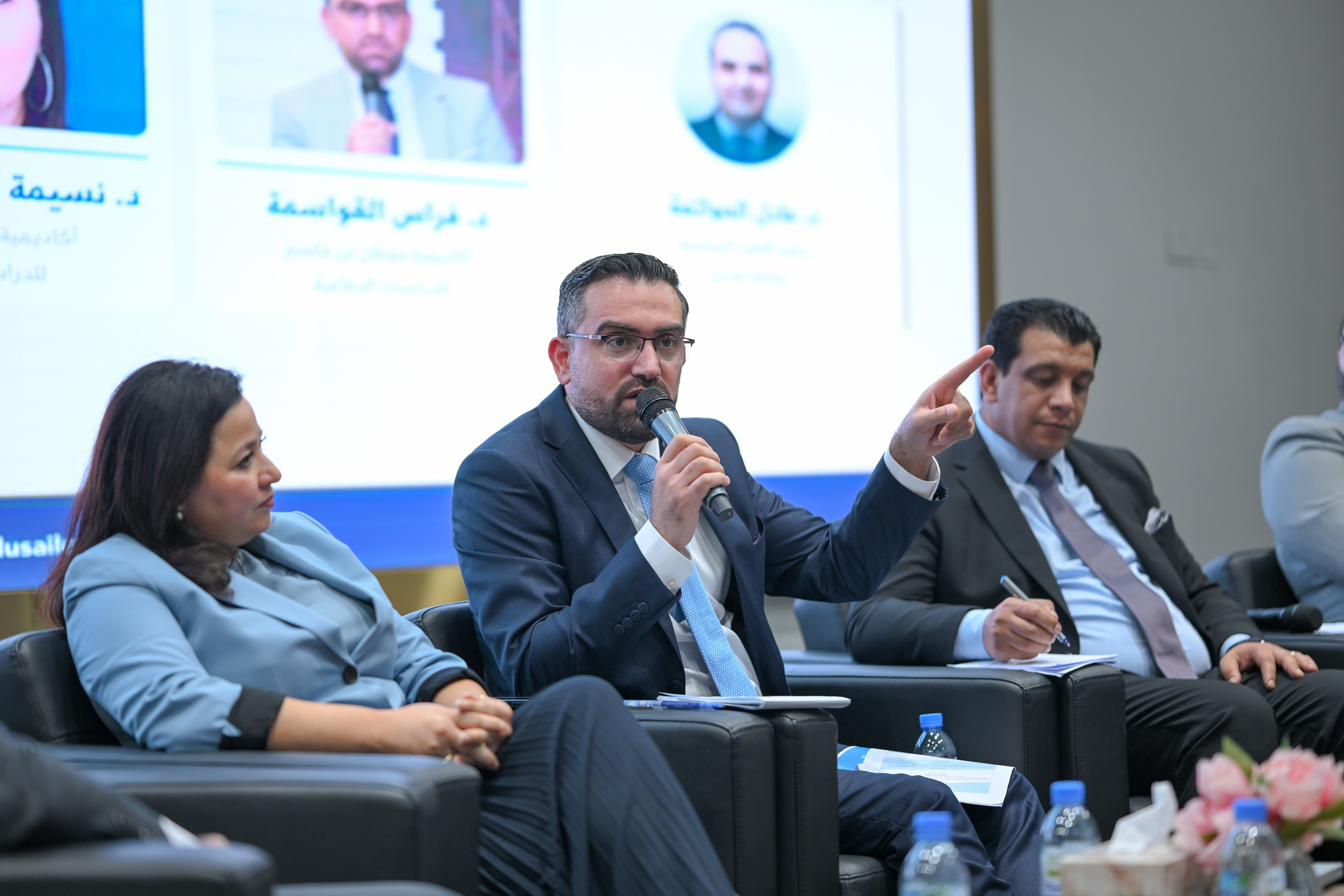
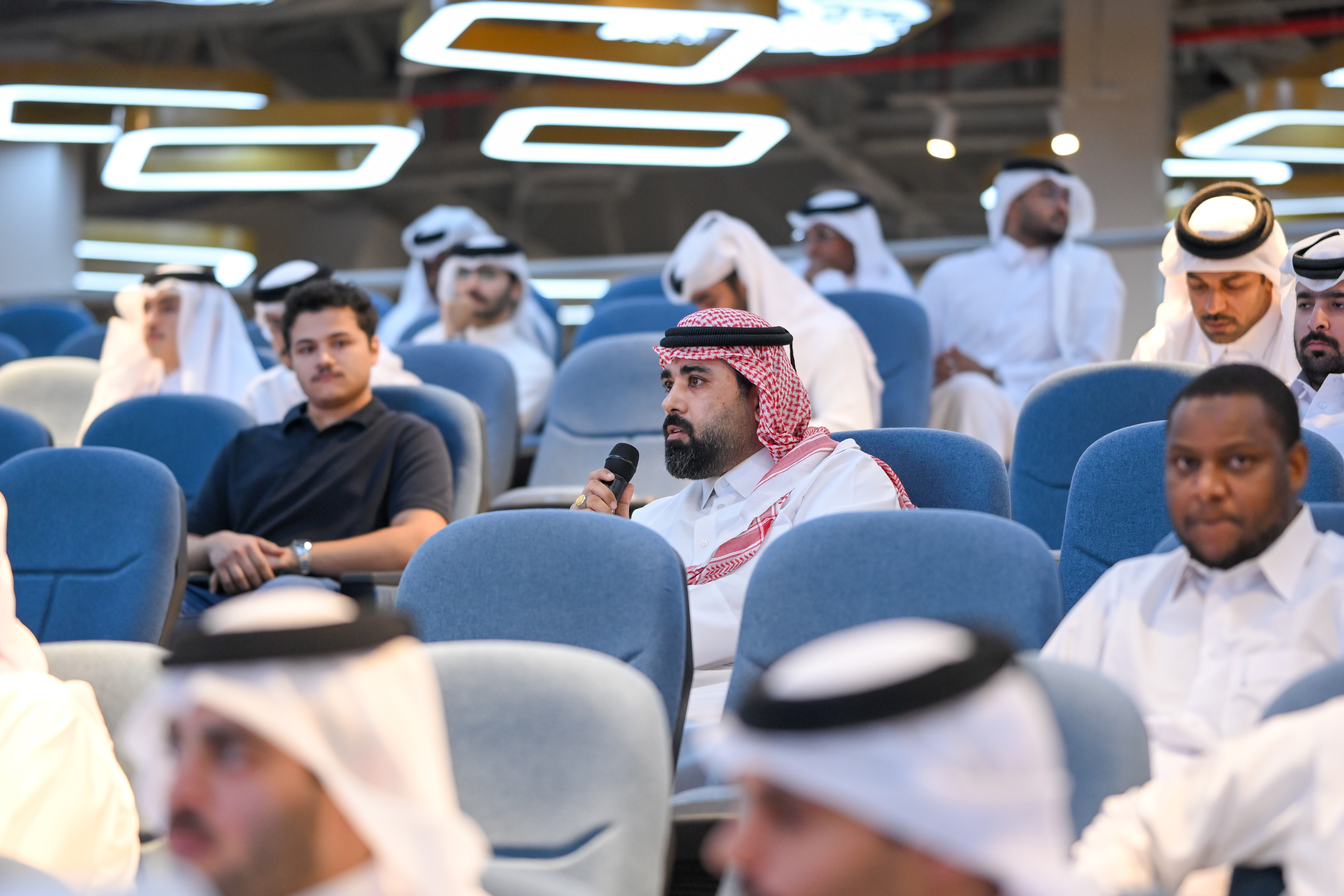

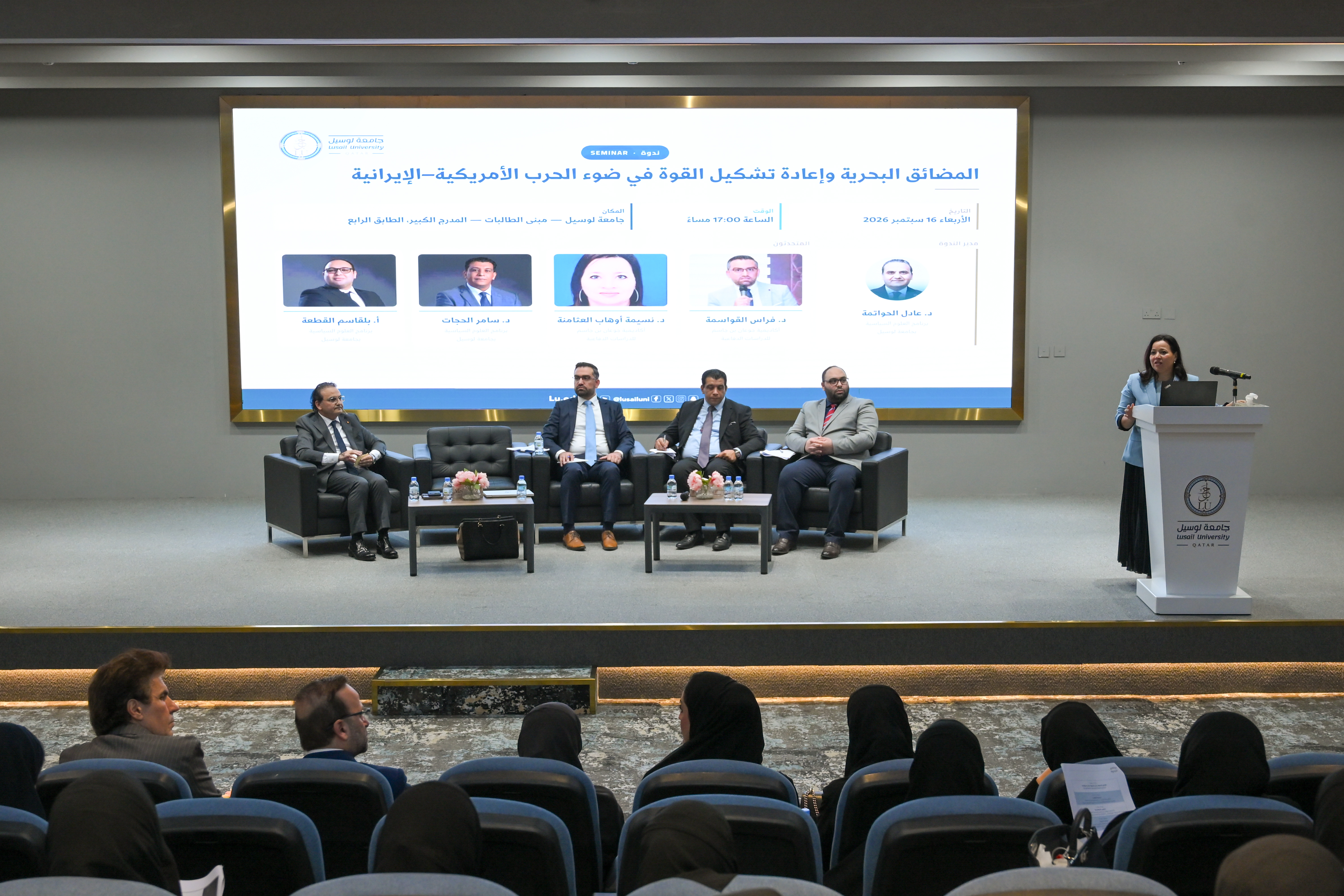
Lusail University's College of Education and Arts held a political seminar on Wednesday, 16 September 2026, titled "Maritime Straits and the Reshaping of Power Balances in Light of the US-Iran War." The event brought together academics and specialists and was attended by faculty members and students.
The seminar formed part of Lusail University's commitment to organising academic events that encourage dialogue and the exchange of ideas and expertise while connecting theoretical knowledge with contemporary issues and challenges. Through these initiatives, the University seeks to create opportunities for rigorous academic discussion, strengthen engagement among researchers and specialists, and enable students to benefit from diverse perspectives and experiences. Such events also foster critical thinking, support academic research, and reinforce the University's role as an active space for producing, sharing and applying knowledge in service of society.
At the opening of the seminar, Professor Ramzi Nasser, Dean of the College of Education and Arts, welcomed the attendees and speakers on behalf of Professor Nitham Hindi, President of Lusail University. He emphasised the importance of strengthening awareness of regional and international issues and crises, enabling students to develop a sound understanding of the context of the US-Iran war and its direct and indirect consequences. He highlighted, in particular, the strategic role of key geographical chokepoints, foremost among them the Strait of Hormuz.
The seminar aimed to incorporate geography into the analysis of international power, examine the limits of technology in overcoming geographical constraints, and assess the strategic significance of the Strait of Hormuz in light of the US-Iran war and changes in global energy markets. It also explored the options available to Gulf states in addressing the risks associated with dependence on a single strategic maritime passage, as well as the relationship between naval power and economic deterrence and the ways in which disruption to navigation can become a tool of strategic pressure.
Discussions highlighted how the conflict has returned geography to the centre of debates about power, security and the global economy. Despite the development of long-range missiles, unmanned aerial vehicles, cyber capabilities and artificial intelligence, narrow maritime passages such as the Strait of Hormuz, Bab Al-Mandab and the Suez Canal continue to influence the calculations of major powers, energy flows, global supply chains, shipping and insurance costs, and global economic stability. In this context, the Strait of Hormuz remains one of the world's most sensitive maritime chokepoints.
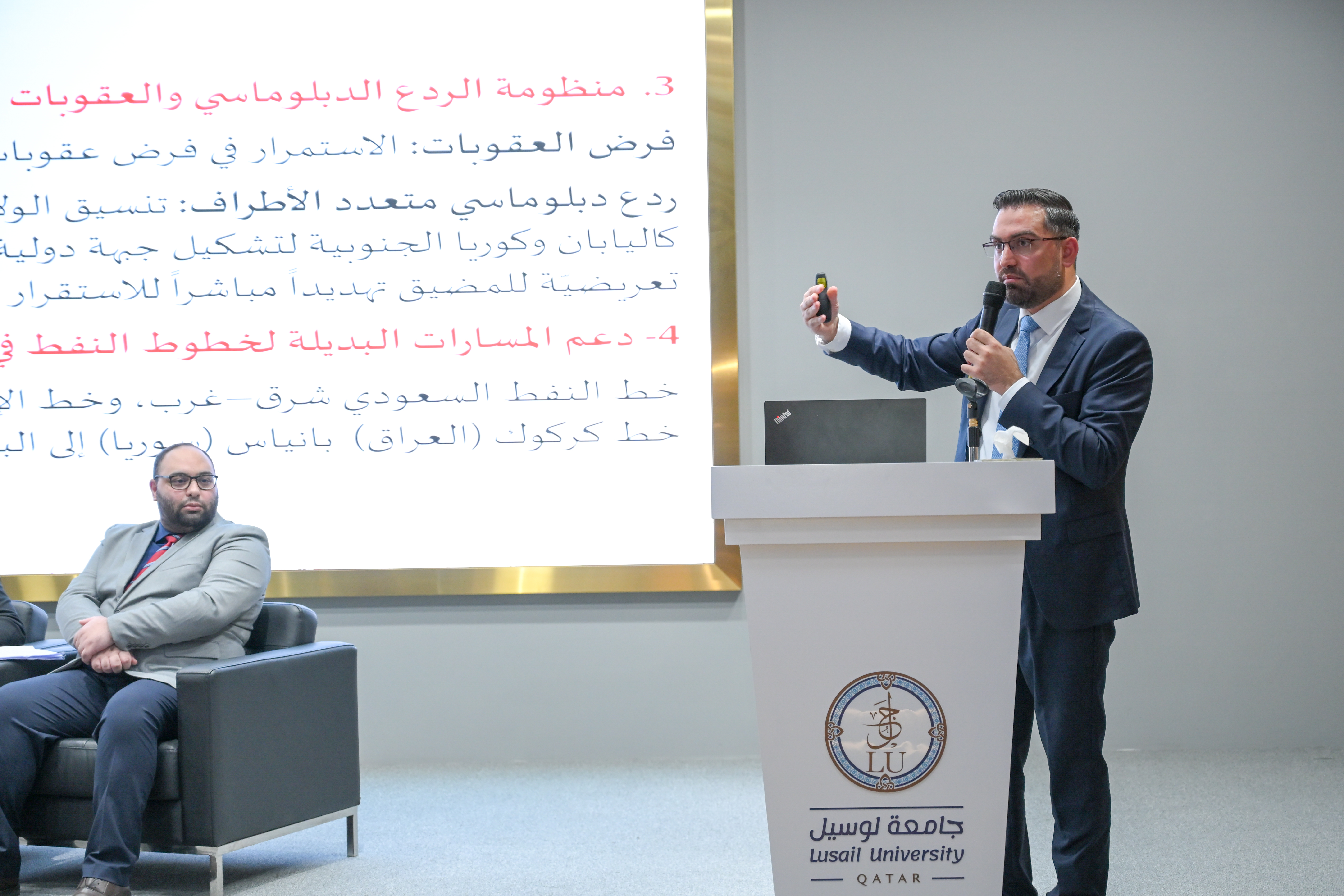
The seminar featured papers examining the Strait of Hormuz from geographical, strategic, political and economic perspectives. The speakers and their papers were:
• Dr Nessima Ouhab, Joaan bin Jassim Academy for Defence Studies: "The Imperative of Geography and the Strategic Importance of Maritime Straits."
• Dr Firas Al-Qawasmeh, Joaan bin Jassim Academy for Defence Studies: "US-Iranian Policies in Addressing the Strait of Hormuz Crisis: Geography as a Weapon."
• Dr Samer Al-Hajjat, Political Science Programme at Lusail University: "From Hormuz to Alternative Geographies: Reshaping the Geography of Energy and Trade amid the 2026 Crisis."
• Dr Belkacem Al-Qataa, Political Science Programme at Lusail University: "The Dictatorship of Geography: A Theoretical Discussion of the Weaponisation of Geography and the Production of Power in International Relations."
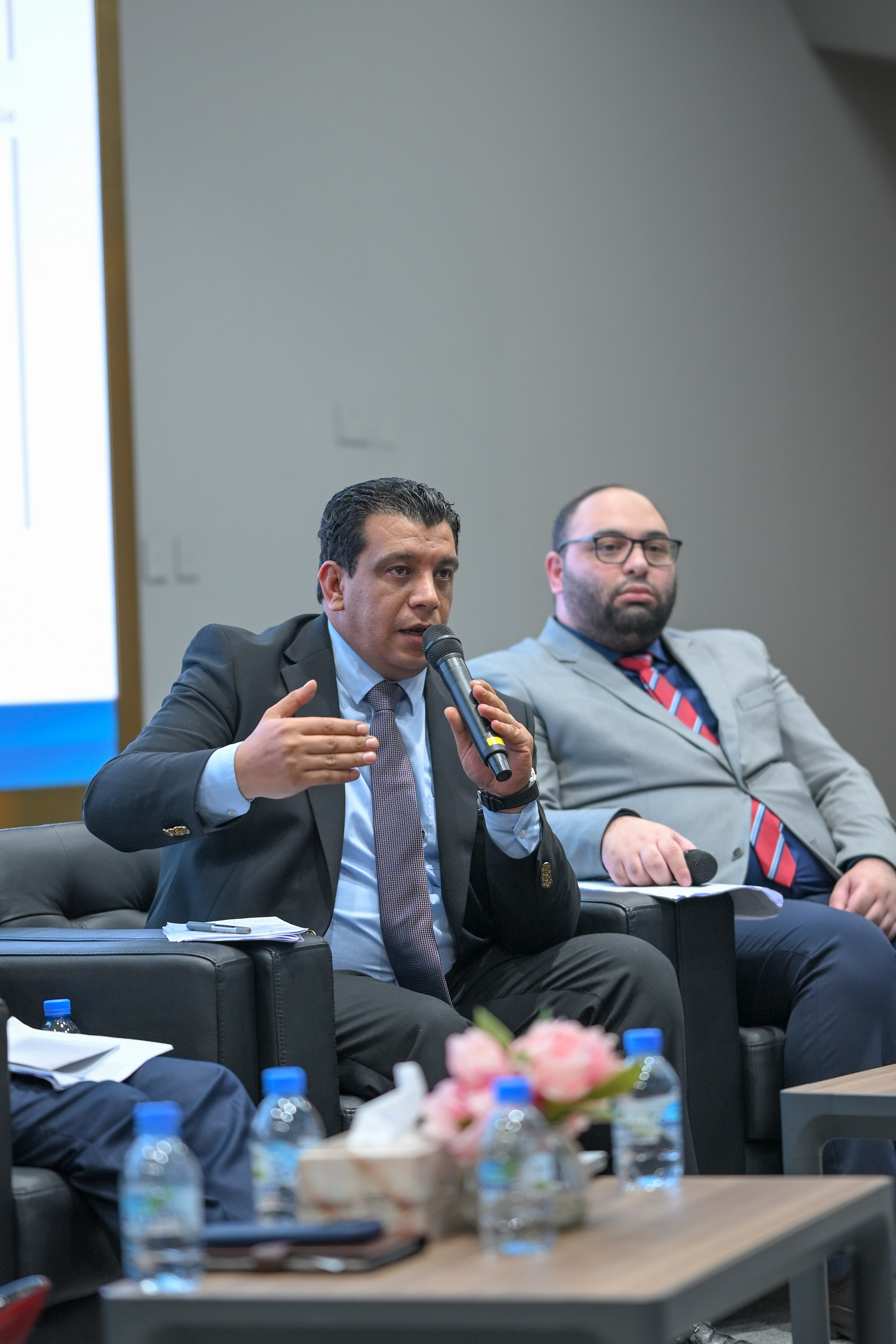
The seminar was moderated by Dr Adel Al-Hawatmeh of Lusail University's Political Science and International Affairs Programme. It concluded with an interactive academic discussion in which attendees and students actively raised questions and exchanged views on the issues addressed in the presented papers.