





09/12/2021
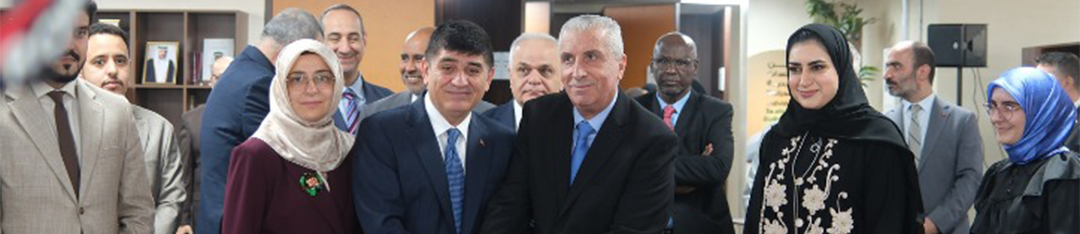
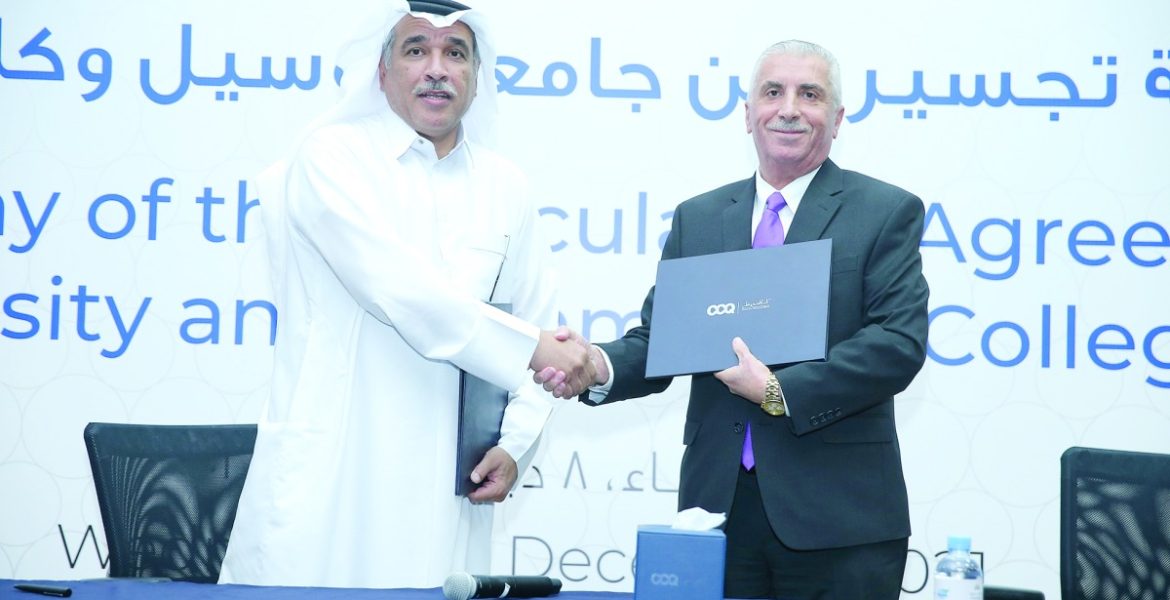
The Community College of Qatar (CCQ) signed a bridging agreement with Lusail University yesterday, aimed at facilitating the transition process for CCQ students to Lusail University to complete their studies in one of the bachelor's programs offered by the university. The agreement was signed by Dr. Mohamed Ibrahim Al-Naemi, President of CCQ, and Professor Dr. Nitham Mohammed Hindi, Lusail University Provost, in the presence of several senior officials from both institutions. According to the agreement, CCQ students will be able to transfer to Lusail University and credit the hours they earned at the college to complete their studies in the Bachelor of Business Administration and Bachelor of Marketing and Distribution Techniques programs.
CCQ students can also participate in the concurrent registration program, which allows them to register for courses at both institutions simultaneously. Dr. Mohamed Ibrahim Al-Naemi stated: "We are pleased to sign the bridging agreement with Lusail University, which includes distinguished expertise and offers many specialized academic programs. We are certain that this cooperation achieves our common goals and enriches the educational experience of our students." Professor Dr. Nitham Hindi expressed the importance of this agreement, noting it is the first in Qatar to enable CCQ students to bridge from a diploma to a bachelor's degree at Lusail University through the (2+2) system, meaning two years of study at the Community College and two years at Lusail University.
The agreement enables students who studied at CCQ to apply for admission to a bachelor's degree at Lusail University in the fall or spring semesters. They may be exempted from English proficiency requirements if they complete at least 12 credit hours with a minimum GPA of 2.00. Students can transfer earned hours provided they are accepted as transfer students and have obtained a diploma with a minimum GPA of 2.00, or completed 12 credit hours. Courses passed with a grade of (C) or higher are considered for transfer, up to a maximum of 60 credit hours. Both parties agreed to periodic reviews of the courses and programs under this agreement and the formation of a bridging committee consisting of 3 representatives from each side.